imtoken will never ask for your seed phrase, private key or verification code. Always review the address, network and request details before transferring, signing or approving.
Official imtoken multi-chain wallet site

Manage Multi-chain Assets and Connect to Web3 with Clarity

A multi-chain wallet, blockchain network and Web3 knowledge hub from imtoken

Bring multi-chain assets, network selection, transfers, DApp connections, token approvals, blockchain concepts, and wallet security into one clear workflow. The goal is to make every on-chain action easier to understand before you confirm it.

Multi-chain assetsNetwork checksDApps & approvalsSecurity education
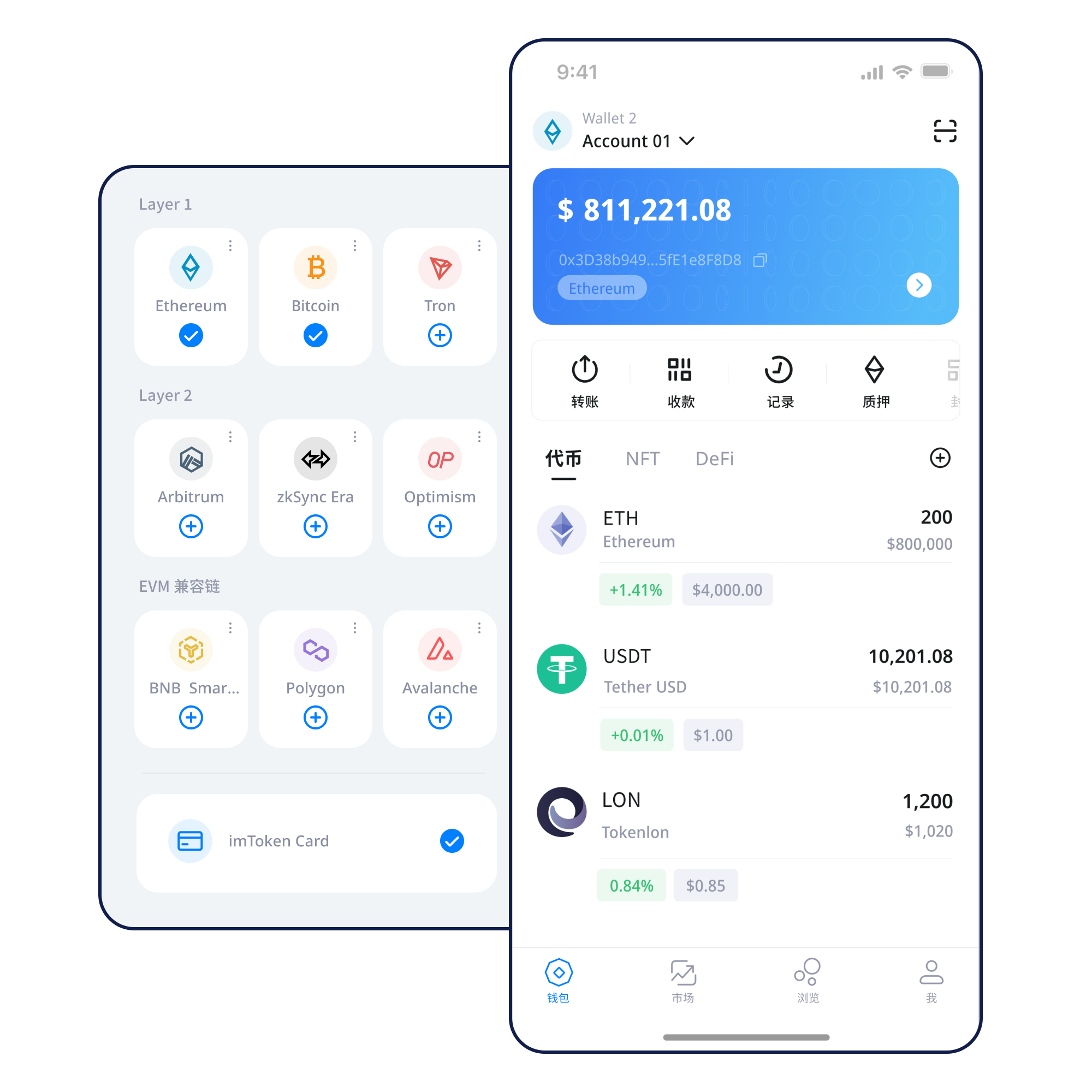
imtoken mobile wallet interface
Quick start

Start with the task you need to complete

Wallet capabilities

Each capability comes with a specific verification step

Multi-chain assets

Keep asset boundaries clear across networks

The same address format may appear on several compatible networks, while balances remain on separate ledgers. Review the network, token contract, and confirmation state together.

Explore multi-chain networks →
Multi-chain asset and network relationships
imtoken App product view

imtoken App

View assets, manage networks, review transactions, and access DApps from mobile. Treat every signature and approval as a separate decision.

View App guide →
Send & receive

Keep address, network, amount, and transaction hash in one workflow

Confirm the network before receiving, check address and fees before sending, then use the transaction hash to verify the final on-chain state.

Read transfer guide →
imtoken Web

A browser connection is not blanket approval

Connection, signatures, and token approvals are different requests. Disconnect sessions you no longer use and review lingering approvals.

Understand Web connections →
Offline protection for seed phrases and private keys
Wallet security

Keep recovery material offline and permissions under review

Seed phrases and private keys stay under the user’s control. Official staff will not ask for them, and they should not be shared through screenshots, chats, or cloud notes.

Open Security Center →
Blockchain networks

Identify the network before interpreting the transaction

Network choice affects where assets exist, how gas works, how long confirmation takes, and which explorer should be used. All panels remain readable without scripts.

Multi-chain network diagram

Multi-chain

A multi-chain wallet can present accounts across several networks, but those ledgers remain separate. Sender and recipient need to use the intended network.

Learn more →
Public chain nodes and transactions

Public Chains

Nodes maintain blocks, transactions, and consensus. A submitted transaction moves through broadcast, inclusion, and confirmation, with the network record as the final reference.

Understand public chains →
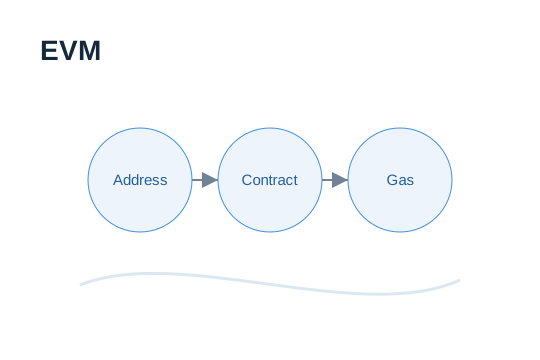
EVM compatible network diagram

EVM Networks

EVM-compatible networks often use similar account and contract models, but gas, parameters, and assets are not automatically shared. Token contracts and approvals are network-specific.

Read EVM guide →
Layer 2 and mainnet relationship

Layer 2

Layer 2 systems scale mainnet through different designs. Cross-layer transfers may involve bridges, settlement confirmation, and exit delays.

Learn Layer 2 →
GasPendingConfirmed

Gas & Confirmations

Gas reflects execution resources, while transaction state tells you whether the network has processed the action. Congestion, fee settings, and contract execution all matter.

Understand gas →
Wallet journey

Six steps for a clearer wallet routine

  1. 01

    Get imtoken

    Use the genuine download entry point rather than an unknown link or chat attachment.

  2. 02

    Create or import a wallet

    Use a trusted device and keep recovery material under your own control.

  3. 03

    Back up offline

    Do not screenshot, send, or place a seed phrase in a public cloud document.

  4. 04

    Select and verify the network

    Check where the asset exists; matching address formats do not move assets across chains.

  5. 05

    Receive or send assets

    Check address, network, and amount; for higher-risk transfers, consider a small test first.

  6. 06

    Review transactions and approvals

    Use the transaction hash and periodically remove DApp connections or token approvals you no longer need.

Web3 & DApps

A connection is only the beginning

Verify the DApp domain before connecting, then inspect the account request. A successful connection does not justify automatically accepting later signatures or approvals. Review the purpose, network, and scope of each request.

Connecting a wallet does not mean every signature request should be approved. Review each signature and approval independently.
Read the full Web3 guide →
  1. Visit the DApp
  2. Confirm the domain
  3. Start the connection
  4. Review account access
  5. Check signature or approval
  6. Complete the action
  7. Disconnect unused sessions
Security

Use one security routine for recovery material, devices, networks, and approvals

Wallet security is a sequence of long-term decisions rather than a single feature. Keep seed phrases and private keys under your control; check address, network, and amount before sending; inspect every DApp signature; and consider revoking permissions you no longer use. Shared computers, public Wi-Fi, and remote-control sessions deserve extra caution. On-chain transactions are usually not reversible by the wallet alone, so prevention is more valuable than recovery.

Open Security Center
Offline protection for wallet recovery material
  • Back up the seed phrase offline
  • Never share private keys
  • Check network and address
  • Review signature requests
  • Manage DApp approvals
Academy

Understand the concepts before making your first on-chain action

Featured starter

What Should You Understand Before Using a Digital Wallet?

An address receives assets; seed phrases and private keys control recovery; the network determines which ledger records a transaction; gas pays for execution resources; a transaction hash helps track state; and DApp connections, signatures, and approvals represent different levels of interaction. Separating these ideas prevents common mistakes such as choosing the wrong network or confusing a connection with an approval.

Start learning →
On-chain basicsPublic Chains & ConfirmationsNodes, blocks, transactions, and finality.Smart contractsEVM & Smart ContractsAddresses, gas, tokens, and approvals.ScalingLayer 2 BasicsMainnet relationships, bridges, and settlement.Web3 securityDApp ApprovalsReview spenders, limits, and revocation.SecurityWallet SecurityRecovery material, devices, and routine checks.GlossaryBlockchain GlossaryQuick definitions for common on-chain terms.
Ethereum & PoS

Ethereum Staking Basics

Ethereum PoS uses validators for block proposals and attestations. Reward sources, network state, withdrawals, and exits depend on protocol rules. Staking is not a fixed-yield product; rewards can change and exits may involve waiting.

Explore Ethereum staking →
Know before participating

Validator and staking risks

Validators can be penalized under network rules, smart contracts carry technical risk, third-party services can add operational dependencies, and digital-asset prices can fluctuate. Participation should fit the user’s own risk judgment.

Understand PoS & validators →
Product & security updates

Fact-first notices and reminders

Recent Update · Product

Wallet and network learning paths continue to improve

Common wallet, network, Web3, and security topics are organized around clearer user tasks.

Security Notice

Stop if anyone asks for a seed phrase or private key

Recovery material stays under the user’s control and should not be sent through chats, forms, or remote-control tools.

Network Notice

Check the source chain before cross-network transfers

Similar address formats do not mean assets automatically move between networks.

Service Notice

Review exit, penalty, and volatility risks before staking

Rewards are not fixed or guaranteed, and both network and market conditions can change.

View Updates →
FAQ

Common Questions

Does a wallet store the asset itself?

A wallet manages keys, addresses, and access to on-chain activity; asset state is recorded on the relevant blockchain network.

Why should I never send a seed phrase to support?

A seed phrase can usually restore control of related accounts. Official staff will not ask for a seed phrase, private key, or verification code.

Does connecting a DApp let it move tokens?

Not by itself in many cases. Connection, transaction signatures, and token approvals are separate requests.

What is a transaction hash for?

It lets you look up on-chain transaction state, block inclusion, and confirmations on the correct explorer.

Why can Layer 2 transfers involve waiting?

Settlement and exit designs differ. Cross-layer transfers may require additional confirmations or waiting periods.

Is Ethereum staking a guaranteed return?

No. Rewards can change, with additional risks from exit queues, validator penalties, contracts, and asset-price volatility.

View full FAQ →
Get started

Understand first, connect second; verify before confirming

All download actions lead to the imtoken download page. Before transferring, signing, or approving, review the address, network, and request details again.

Download imtoken